
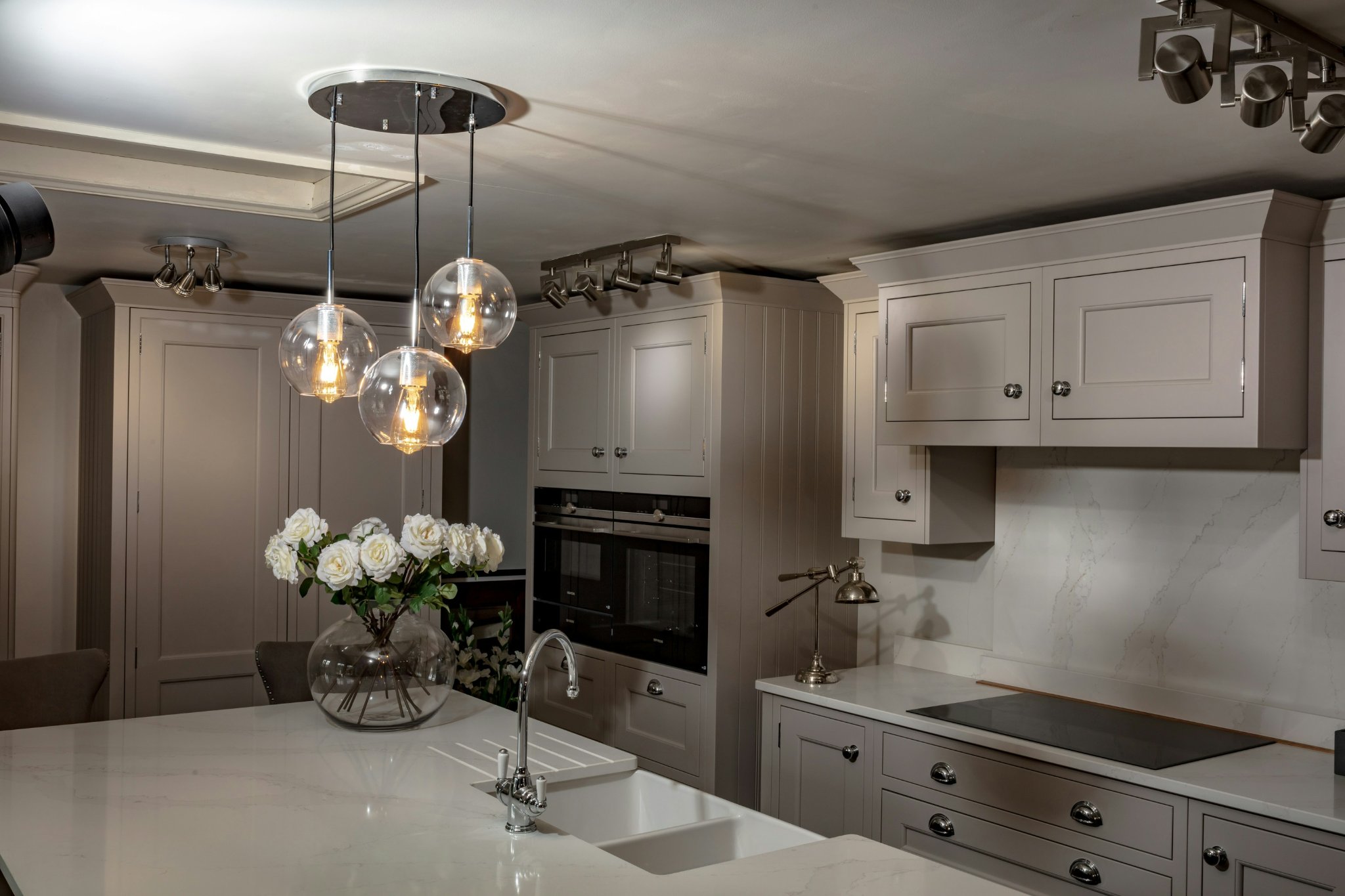
Quick Answer: How High Should Pendant Lights Hang Over a Kitchen Island?
The most common mistake homeowners make with kitchen island pendant lights is assuming that the “right height” is only about following a number. In reality, pendant lighting height over kitchen island spaces is a balance between visibility, comfort, lighting performance, and the overall feeling of the room.
For most kitchens, the bottom of a pendant light should hang approximately 30–36 inches (76–91 cm) above the countertop surface. This measurement should always be taken from the top of the island countertop to the lowest point of the pendant fixture, not from the ceiling.
However, the standard measurement is only the starting point. A pendant that is technically installed at the “correct” height can still make a kitchen feel uncomfortable if the fixture is too large, the ceiling height is different, or the lighting blocks important sightlines.
After reviewing many kitchen designs and installation examples, one thing becomes clear: most pendant lighting problems are not caused by choosing the wrong fixture. They are caused by placing the fixture incorrectly.
Mistake 1: Hanging Pendant Lights Too Low Over the Kitchen Island
One of the most noticeable mistakes is installing pendant lights too close to the island surface.
A low pendant may look attractive in a showroom photo because it creates an intimate atmosphere. However, real kitchens are active spaces. People prepare food, talk with family members, sit at stools, carry dishes, and move around the island every day.
When pendants hang too low, several problems appear:
They interrupt eye contact across the kitchen.
They make conversations feel visually blocked.
They can create glare when people look upward.
They make the island feel smaller and more crowded.
A kitchen island is usually both a workspace and a social area. The lighting should define the island without becoming an obstacle.
A simple test before installation is to temporarily hang a piece of string or cardboard at the planned height. Stand at different positions:
standing near the island;
sitting on a bar stool;
looking toward another person across the island.
If the temporary pendant blocks faces or feels visually heavy, the final installation probably needs adjustment.
Mistake 2: Hanging Pendant Lights Too High Because You Want the Kitchen to Feel Bigger
Another common mistake happens when homeowners intentionally raise pendant lights too much.
The thinking is understandable:
“Higher lights will make the ceiling feel taller.”
But pendant lighting does not work like recessed ceiling lights. Its purpose is not only illumination. It also creates a visual connection between the ceiling and the island.
When pendant lights are too high:
the island loses its focal point;
the fixture feels disconnected from the furniture below;
the countertop receives less focused light;
the kitchen can feel unfinished.
The purpose of pendant lighting is to visually anchor the island.
A large open kitchen with high ceilings does not automatically require extremely high pendant placement. Instead, the fixture size, shape, and proportion should work together with the room.
For taller ceilings, the pendant can usually move slightly upward, but the relationship between the fixture and countertop should remain the priority.
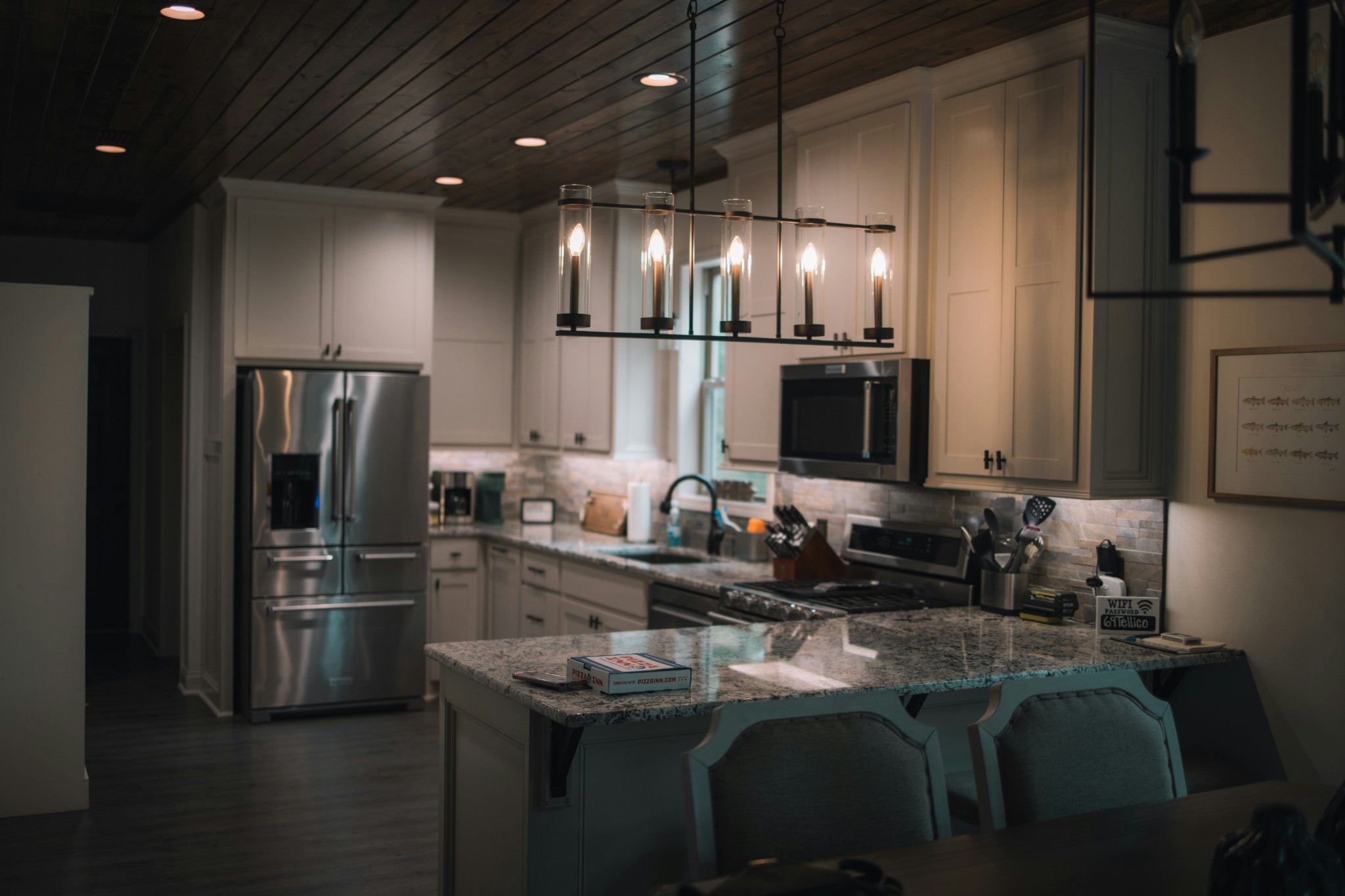
Mistake 3: Measuring From the Ceiling Instead of the Countertop
This is one of the easiest mistakes to avoid.
Many people measure pendant height from the ceiling because the electrical box is located there. However, the kitchen island is the surface that determines whether the lighting feels comfortable.
The correct measurement is:
Countertop surface → bottom of pendant fixture
Not:
ceiling → pendant;
floor → pendant;
electrical box → pendant.
Kitchen islands can have different heights, including:
standard countertop height;
raised bar-height sections;
custom-height islands.
The same pendant drop can look completely different depending on the island height.
Always start with the working surface because the island is where the light needs to perform.
Mistake 4: Ignoring Ceiling Height When Choosing Pendant Height
The standard 30–36 inch guideline works well in many kitchens, but ceiling height changes the visual balance.
A general approach:
Ceiling Height |
Starting Pendant Clearance |
|---|---|
8 ft ceiling |
Around 30–32 inches above countertop |
9 ft ceiling |
Around 32–36 inches above countertop |
10 ft+ ceiling |
Adjust upward carefully based on fixture size |
The goal is not simply to fill vertical space.
A common misunderstanding is:
“Higher ceiling = much longer pendant drop.”
This can create the opposite result. Extremely long drops may make the fixture dominate the room instead of complementing it.
The best installations feel intentional. The pendant should look connected to the island, not like it is floating halfway between the ceiling and countertop.
Mistake 5: Choosing the Wrong Pendant Size and Trying to Fix It With Height
Many homeowners adjust height when the real problem is fixture scale.
For example:
A large metal pendant installed 30 inches above a small island may feel overwhelming.
A small glass pendant installed 40 inches above a large island may disappear.
Height and size work together.
Before changing pendant height, consider:
Island Size
A longer island usually needs either:
multiple balanced pendants;
or one longer linear pendant.
Pendant Diameter
Large fixtures generally look better slightly higher because their visual weight is stronger.
Small, lightweight fixtures can often sit lower because they do not block the room as much.
Kitchen Style
Minimal kitchens often benefit from clean spacing and open sightlines.
Traditional or farmhouse kitchens may use larger statement pendants that become a visual centerpiece.
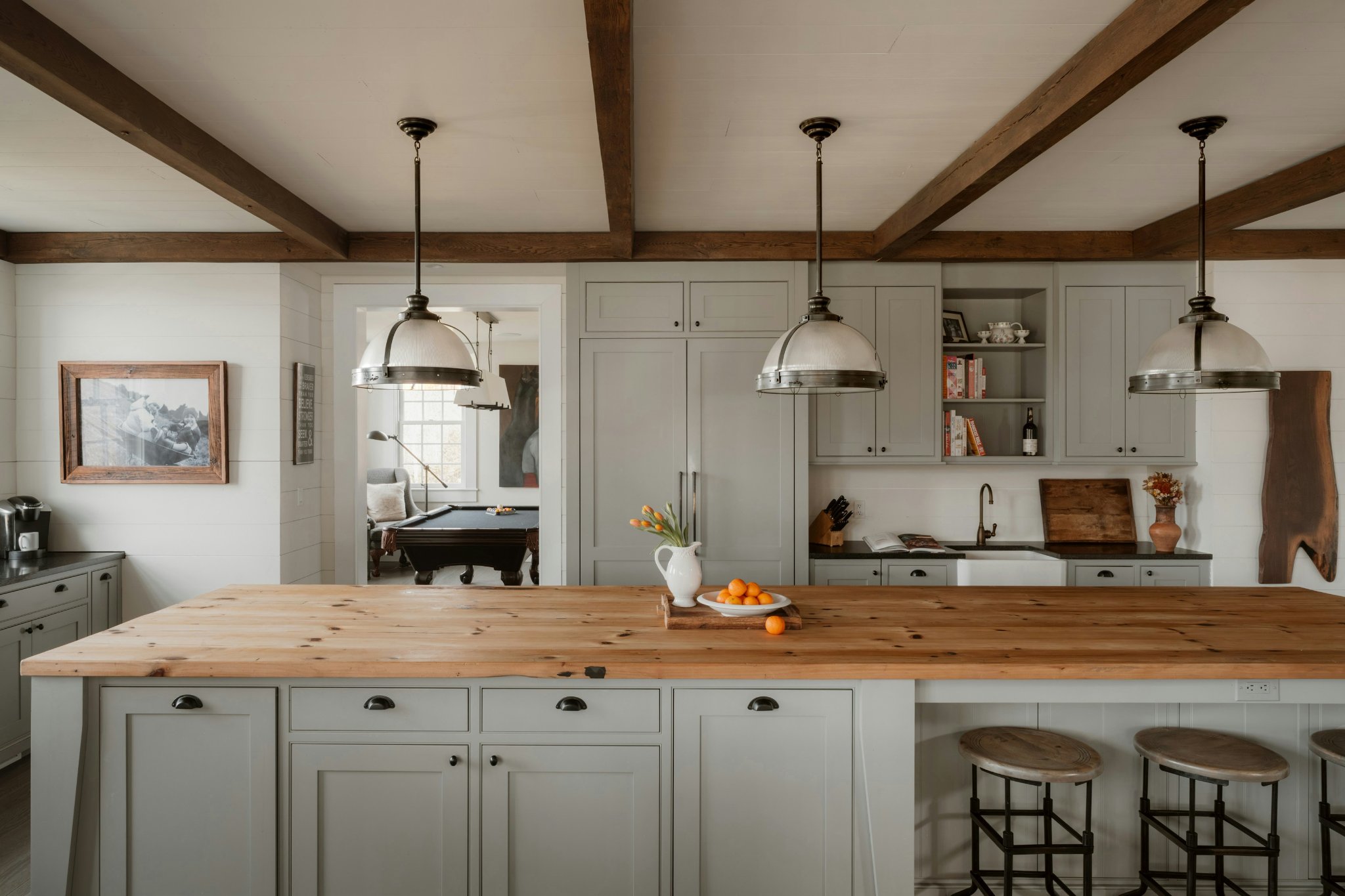
Mistake 6: Forgetting About Pendant Spacing
Height is only one part of successful kitchen island lighting.
Multiple pendants need proper spacing to avoid looking crowded.
A common starting point is:
approximately 24–30 inches between pendant centers;
balanced distance from the island edges.
Poor spacing creates two problems:
Too close:
the island feels visually crowded;
the lights compete with each other.
Too far apart:
the lighting looks disconnected;
some countertop areas may feel darker.
The goal is rhythm.
Good kitchen lighting should guide the eye naturally across the island.
Mistake 7: Installing Beautiful Pendant Lights Without Considering Function
A kitchen island is not only decorative.
It is used for:
food preparation;
homework;
working from home;
eating;
entertaining guests.
Pendant lighting needs to support these activities.
A beautiful fixture that creates glare or weak illumination is not successful kitchen lighting.
Consider:
Light Direction
Open-bottom fixtures provide stronger downward illumination.
Opaque shades create softer atmosphere but may require additional kitchen lighting.
Bulb Quality
Color temperature and color rendering affect how food, surfaces, and materials appear.
Dimming Capability
A kitchen often needs different lighting levels:
Morning:
bright and functional.
Evening:
soft and comfortable.
A dimmer allows one lighting system to serve multiple purposes.
A Practical Method: How to Find the Right Pendant Height Before Installation
Instead of installing immediately, use this simple process:
Step 1: Start With the Standard Range
Mark 30, 33, and 36 inches above the countertop.
Step 2: Create a Temporary Mockup
Use:
painter’s tape;
cardboard;
string;
paper template.
Step 3: Check From Real-Life Positions
Look from:
standing height;
seated height;
kitchen entrances;
nearby living spaces.
Step 4: Adjust Based on Your Lifestyle
A family that frequently sits at the island may prefer clearer sightlines.
A kitchen mainly used for preparation may prioritize stronger task lighting.
The “perfect” height is the one that works in your actual home.
Final Thoughts: The Right Pendant Height Is About Balance, Not Rules
The biggest mistake with kitchen island pendant lighting is treating installation measurements as fixed laws.
The 30–36 inch guideline is an excellent starting point, but successful lighting depends on the relationship between:
island size;
ceiling height;
pendant design;
daily activities;
personal comfort.
A well-positioned pendant light should feel natural. You should notice that the kitchen looks better, but you should not feel distracted by the lighting itself.
Good lighting disappears into the design while quietly improving how the space works.
FAQs
1. How high should pendant lights hang over a kitchen island?
For most kitchens, pendant lights should hang approximately 30–36 inches above the kitchen island countertop. This measurement should be taken from the countertop surface to the bottom of the pendant fixture.
However, the ideal pendant lighting height over kitchen island spaces depends on factors such as ceiling height, pendant size, island dimensions, and how the space is used.
A homeowner who frequently sits at the island may prefer slightly higher placement for better visibility, while someone focused on task lighting may choose a slightly lower position.
2. Can pendant lights hang higher than 36 inches above a kitchen island?
Yes, but it depends on the room. Higher ceilings, large pendant fixtures, and open-concept kitchens may require adjustments. However, hanging pendants too high can make them feel disconnected from the island. The goal is not to follow a number blindly but to maintain a balanced relationship between the ceiling, lighting fixture, and countertop.
3. How many pendant lights should go over a kitchen island?
The number of pendant lights depends mainly on island length and pendant size.
General recommendations:
Small islands: 1–2 pendants
Medium islands: 2–3 pendants
Large islands: 3 or more pendants or a linear fixture
The important factor is not the number of lights but whether the lighting provides balanced coverage without overcrowding the space.
4. What size pendant lights are best for a kitchen island?
Pendant size should match the scale of the island. Large islands can support larger statement pendants, while smaller islands usually work better with compact fixtures.
A useful approach is:
large pendant + higher ceiling + large island;
smaller pendant + lower ceiling + smaller island.
The wrong size can make even the correct pendant height look incorrect.
Share:
Clear vs Frosted Glass Pendant Lights for Kitchen Islands: Which One Makes More Sense?
Lamp in Wood Adds Natural Beauty And Calm